You didn’t need initiative to know it was too late. The webs weren’t fresh. The bodies were cold. And the stone wasn’t stone — it moved.
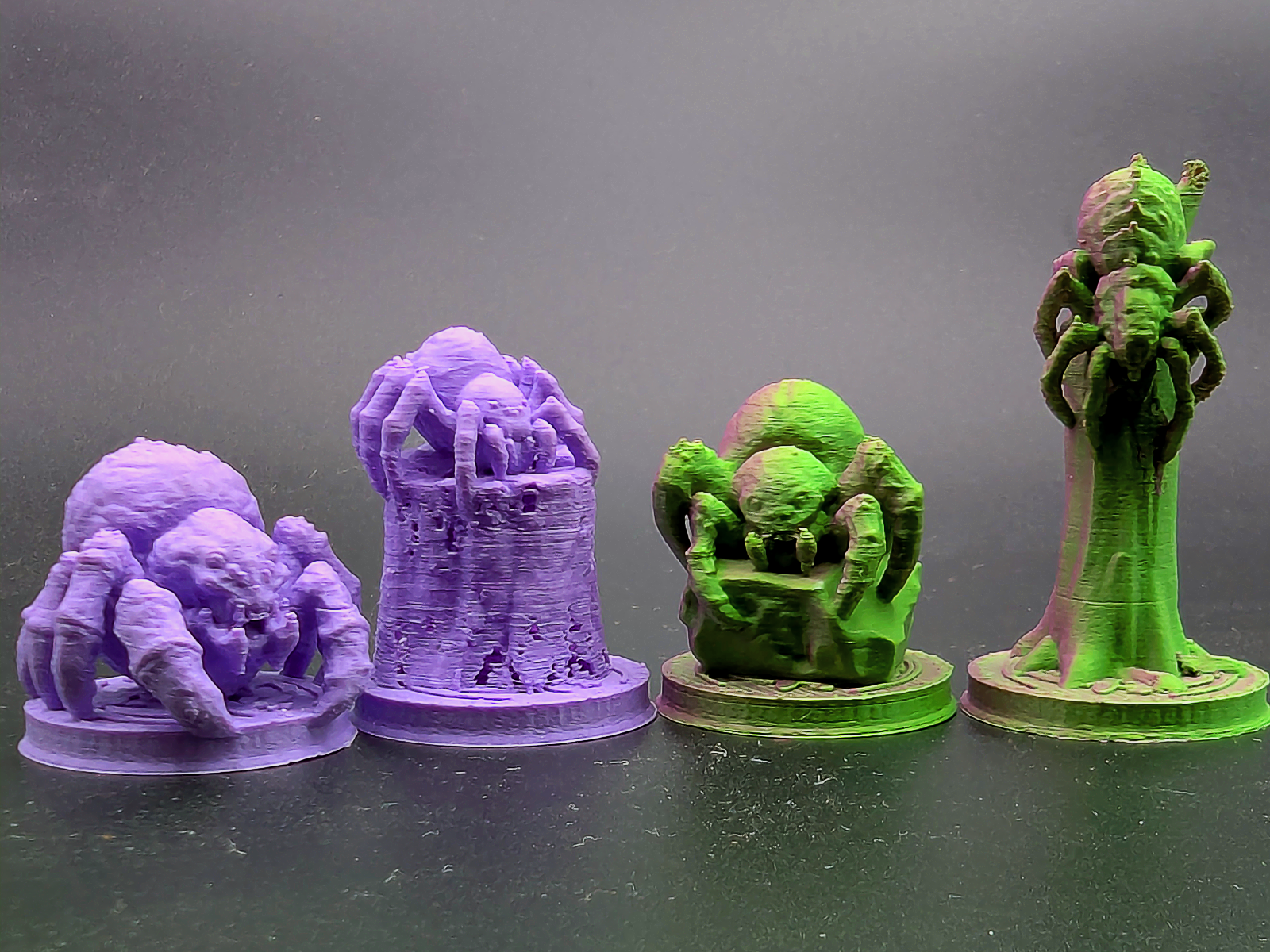
This spider pack isn’t just “creature filler.” These minis are narrative anchors. They build pressure. They push story. They make your players sweat before combat even begins.
Progressive encounter design: Use each mini as a stage escalation — start with a nest, then a single hunter, then a statue that comes alive.
Environmental storytelling: Drop these across a dungeon to hint at a larger queen, deity, or curse behind the scenes. No exposition required.
Pact or cult flavor: Use them to show worship gone too far — a spider staff, spider altar, spider idol… then the real spiders arrive.
Silent boss foreshadowing: Place the tall totem-spider as a background object in early sessions. Bring it to life later when the players finally return.
Trap triggers: Use the idol or egg mound as bait. When inspected, they animate or summon the spiders.
Magic item origins: The staff mini can represent a relic that infects or speaks. A spider staff, brood ring, or cursed focus.
Subterranean fauna: These don’t have to be magical. They work great as natural predators in caves, tunnels, and forgotten cities.
Monster evolution: One is a nest, one is a crawler, one is a statue, one is a god-fragment. Use all four as a progression of power.
Insanity symbolism: Perfect for horror campaigns where the boundary between creature and god breaks down. Especially the tall idol mini.
Not for comedic or low-stakes encounters. The tone of these is grim, alien, and ominous.
These do not fit every scenario. Use them in the open, the forest or plces where the build-in terrain fits.
Not for friendly NPCs or tame companions. They’re too sinister, too evocative. Even as familiars, they’ll raise eyebrows.
2 print profiles that has been tests and redesigned for this specific pack.
 1 / 7
1 / 7